
From a pilot to a pilot
Excellent vision at all distances is crucial to a pilot. In demanding circumstances, eye sight should be something you rely on, not something that adds pressure. For that reason, pilots require spectacles that always guarantee good vision.
The majority of people (including pilots) will start to experience presbyopia in their mid-forties. The lens in the eye loses its ability to focus and reading in low-light conditions becomes challenging. That’s when you have to push the emergency frequency chart further away to focus it.
In our fifties anything closer than 40 cm becomes blurry. At this point, even the instrument panel is not in clear focus.

Spectacle options for pilots
Multifocal lenses are by far the best optical correction for the cockpit. Once your eyes have adapted to these lenses, they enable focus at all distances: from the runway, to the instruments, to the checklist. They are tailor-made to the specific needs of the individual pilot.
Multifocal contact lenses are also a good option. They can even eliminate the need to use spectacles. Factors like the quality of the cabin air, dryness and long hours could, however, affect the comfort of contact lenses.
The so-called “office lens” is an alternative to multifocal lenses. It enables one to see clearly from 30 cm to 1 metre. Office lenses increase the range of focus and the field of view which makes them very practical. An important drawback is that they cannot be used to look outside the cockpit.
A further alternative used by non-pilots is monovision contact lenses.
One eye is fitted with a contact lens for distance and the other one for near. This setup, however, often impairs binocular vision and depth perception and is not advisable in the cockpit.
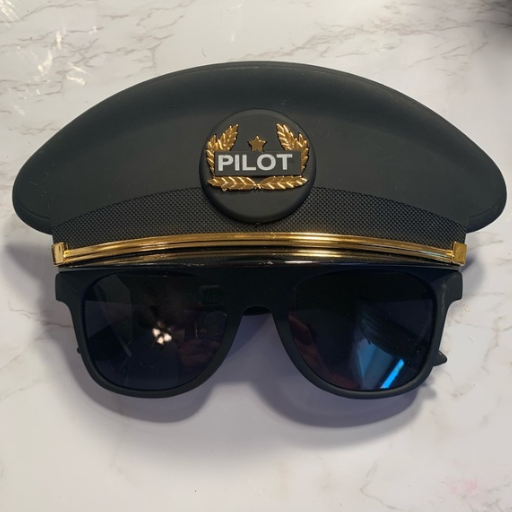
Sunglasses
Pilots are exposed to UV rays and glare for long periods and quality sunglasses are essential for eye protection against these hazards. However, pilots need to be cautious with polarised sunglasses. The way these sunglasses filter horizontal light waves can make it difficult to read on LCD screens.
Prescription sunglasses are available for all visual requirements.
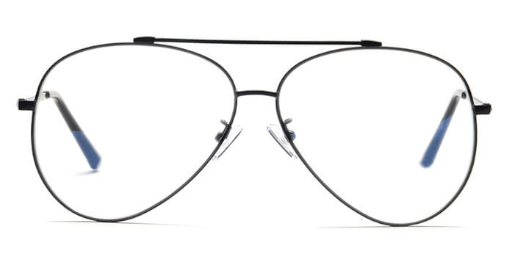
Frames
For pilots, comfortable spectacle frames also need to accommodate the headset that would fit over the spectacle frame temples. When you choose your frame, take your headset along with you.
The importance of a backup pair of your tailor-made prescription glasses in your flying bag cannot be overstated.
Your full annual visual examination should include:
- Determining the refractive error
- Binocular balance – eye muscles
- Visual fields
Internal ocular health assessment
- glaucoma, macular degeneration, cataracts, etc.
External ocular health assessment
- pterigiums, red eyes, burning eyes, etc.